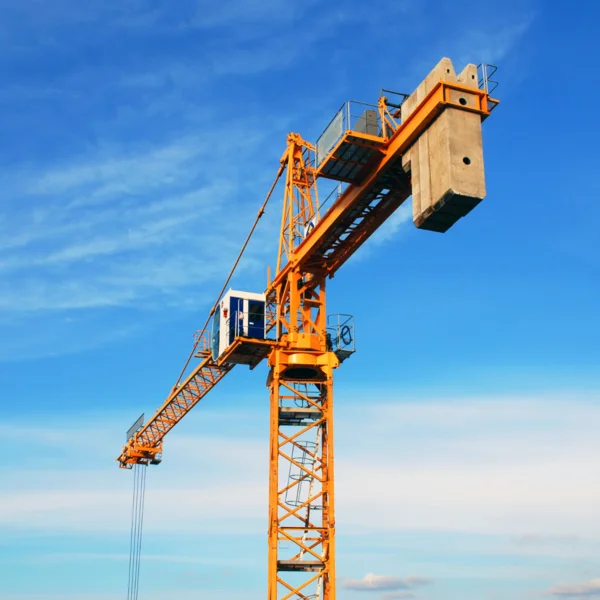
Steel wire ropes for tower cranes – which to choose and why is it so important?
Tower cranes are the giants of construction sites—they enable lifting heavy materials to significant heights, moving them precisely, and serving large working areas. Installed on a fixed base or anchored to a building structure, they require high-grade steel wire ropes capable of withstanding extreme loads, changing weather conditions, and intensive operation.
How to choose a rope for a tower crane?
Selecting the right steel wire rope depends on the crane type (stationary, mobile, top-slewing or bottom-slewing), its configuration, and the function the rope is meant to perform. Each rope type has a different role in the lifting system and must meet specific technical requirements.
Main hook rope – The primary rope used for lifting loads. It must offer high tensile strength, resistance to bending and abrasion, and structural stability even at large lifting heights.
Trolley rope – Responsible for moving the hook along the jib. It should be flexible, wear-resistant, and designed for cyclic operation. A key requirement is its ability to run smoothly in guides and over sheaves without twisting.
Guy rope / tie-back rope – Used in anchored or stabilized crane structures. It helps keep the crane upright and transfers forces from wind or overloads. It requires high stiffness and strong resistance to external factors.
Original ropes or alternatives?
In the case of tower cranes, choosing a rope that complies with the crane’s DTR (technical and operational documentation) is particularly important. Many users opt for the rope specified by the manufacturer—especially for new machines under warranty or cranes operating in demanding conditions.
An alternative is to use replacement ropes from reputable manufacturers that meet the required quality and load-bearing standards. This can be a cost-effective option, often maintaining full functionality while reducing operating costs.
What should you look for when choosing a rope for a tower crane?
✔ Rope construction (resistance to rotation, bending, and abrasion),
✔ minimum breaking force and fatigue strength,
✔ diameter matching the crane manufacturer’s requirements for the drum and sheaves,
✔ certification and compliance with standards (e.g., EN 12385).